
Rip Rap Landscaping in Osakis MN
February 18, 2026Fire Pits and Fireplace Alexandria MN
March 2, 2026Key Takeaways
- You can transform your Alexandria outdoor space with paver patios that manage Minnesota summers with style, enhance curb appeal, and add to property value for life. Select patterns, borders, and textures that complement your home’s character and lakeside lifestyle.
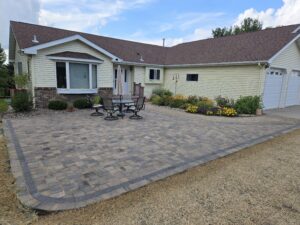
- You benefit from a disciplined installation process tailored for Douglas County soils that includes site assessment, compacted base, precise setting, polymeric joint stabilization, and a protective seal. Ask your crew to verify the proper pitch of 1 to 2 percent for drainage away from structures.
- Select pavers for consistency, snug joints, and straightforward snow shoveling, or opt for flagstone for a rustic personality and organic contours that harmonize with the surrounding nature. For Alexandria’s freeze-thaw cycles, insist on materials rated for de-icing salts and repeated temperature swings.
- You can plan for lakeside living with slip-resistant textures, built-in seating, and designated grilling, dining, and fire zones. Incorporate lighting, edging, and drainage channels to keep feet safe and direct runoff toward rain gardens or swales.
- You’ll experience improved winter performance through a properly compacted base, frost-resistant bedding, and polymeric sand that inhibits heave and joint washout. Employ plastic or rubber-edge shovels and calcium magnesium acetate instead of rock salt.
- You can balance hardscape with nature by combining patios with native Minnesota plantings, shoreline buffers, and permeable accents that retain water and encourage our local pollinators. Work with downspouts, permeable joints, and catch basins to manage stormwater and protect area lakes.
Click Here to Checkout the Paver and Flagstone Gallery
Paver and Flagstone Systems in Alexandria, MN, by Rockwood Landscape Company, provide durable surfaces with clean lines, tight joints, and year-round performance to withstand the Douglas County weather. You get frost-resistant bases built on compacted class-5 gravel, 1-inch sand beds, and polymeric joint sand that holds up through freeze-thaw swings and spring melt. For lakeside patios near Le Homme Dieu or Lake Carlos, you spot slip-resistant textures, secure edge restraint, and 1 to 2 percent drainage grades to quickly move runoff. Flagstone choices include locally popular quartzite and limestone, cut 1.5 to 2 inches thick to withstand constant foot traffic. Paver options range from modular concrete mixes that complement lake homes, cabins, and in-town lots. To balance color, pattern, cost, and maintenance, the following sections deconstruct what suits your space.
Why Choose Paver Patios?
You want a patio that can take Alexandria’s dreaded freeze-thaw cycles, fits your budget, and still looks sharp every June on the lake. Paver systems provide you with that exact mix of budget management, neat construction, and durability that stands firm in west-central Minnesota.
Minnesota Summers
Summer here peppers lightening fast from cool mornings to hot, stormy afternoons. Pavers handle thermal movement and heavy rain better than giant slabs because each unit moves independently. Joints relieve stress instead of cracking. They are four times harder than poured concrete slabs, which is great when you encounter hail, grill heat, and nonstop foot traffic from the lake to the house.
Drainage is simple. A compacted base with polymeric sand joints sheds water, minimizes heave, and controls weed growth. You can seal it to be sunscreen-, lake mud-, and food-resistant, and keep maintenance low when guest footfall is high around the 4th.
Property Value
You gain value when the patio feels secure, authentic, and complete. Paver tolerances permit only plus or minus one-eighth inch in height, which minimizes trip hazard for children, animals, and visitors and communicates excellence to purchasers. The system is tried and true, with decades of use on driveways, walks, patios, and pool decks, so appraisers and inspectors view it as durable, not new and untested.
It’s fast to install and usually costs between $10 and $20 a square foot for labor and base prep in our market. It is generally quicker with fewer site problems than flagstone. That pace reduces disruption to your yard and shrinks the journey from contract to first cookout. Since sections can be lifted and reset, future repairs are cheaper than tearing out a monolithic slab.
Design Freedom
You’ve got variety. Pavers are available in a variety of colors, textures, and sizes, so you could complement a cedar deck, a gray-toned lakeside façade, or the warm buff of local fieldstone. Herringbone works well for load paths near a parking pad, running bond creates clean lines off the kitchen slider, or a basketweave inset can frame a fire pit.
Edge restraints, soldier courses, and mixed modules let you zone spaces: dining near the house, lounge near the water, and a narrow walk tying them together. Sealing can deepen tone and add light sheen with no gloss, maintaining a natural appearance that complements Alexandria’s popular cabin-to-craftsman styles.
Our Alexandria Installation Process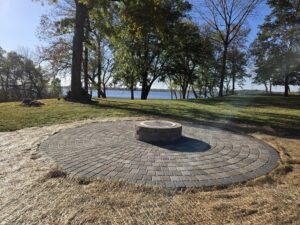
You receive a build plan optimized for Douglas County soils, lake-effect moisture, and extended freeze-thaw cycles. Every phase is designed to make your paver or flagstone surface age gracefully for decades with minimal maintenance.
1. Site Assessment
We begin by laying out your pavers or flagstone, mapping traffic lines, edge loads, and snow storage areas. This initial step establishes scope, finish height, and tie-ins to doors, garages, and lawn grades.
In Alexandria, soils vary from sandy loam around the Chain of Lakes to heavier glacial till on elevated areas. We perform bearing probe tests, identify organics, and monitor frost depth targets. Drainage paths are designed to keep water moving away from your house and out of joint lines.
We establish slope at one-eighth to one-quarter inch per foot, route downspouts, and flag tree roots to protect. If you’re planning grills, spas, or seat walls, we size the base for those point loads now.
2. Base Foundation
Dig is below frost with a buffer for bedding. We strip organics, then install four to ten inches of angular base aggregate (MN-spec Class 5, or open-graded where drainage is paramount), compacted in thin lifts with a plate compactor to achieve target density.
Edge restraints in concrete or aluminum secure the field. In wetter pockets or closer-to-shore lots, we add geotextile to separate soils and halt pumping. Good base prep and drainage provide you with decades of dependable performance.
3. Precision Setting
For pavers, we screed 1 inch of sand (washed concrete sand), then set units with tight control on bond lines, string lines, and laser levels. We verify lippage under foot and wheel loads.
For flagstone, we hand-set on sand or a mortar spot-bed over a compacted base, shimming to kill rock wobble. Steps and landings receive additional inspections as Minnesota winters really take a beating on risers.
4. Joint Stabilization
Polymeric sand is swept, vibrated in, and misted to lock in place. Plan to top off joint sand every few years because wind, shovels, and melt cycles steal lines. For flagstone, we utilize polymeric sand or a flexible joint mortar for wide joints.
Maintenance is simple. Sweep, wash, pull weeds early, and spot-clean stains fast. Inspect joints every spring.
5. Final Seal
Sealer selection fits use: natural-matte for patios, satin for drives, breathable films for freeze-thaw. We apply only on dry, clean surfaces above 50°F and watch the dew points. Sealing slows stains and helps joints shed water, extending service life.
Pavers vs. Flagstone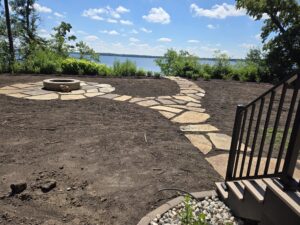
Side-by-side insight to help you weigh performance, craft needs, and style for your Alexandria, MN site from Rockwood Landscape Company.
Paver Uniformity
You get consistent unit size, edge, and thickness, which speeds layout and tightens tolerances. That consistency allows for distinct patterns, herringbone for Miltona clay loam driveways, running bond for tight walks, or basketweave to complement a brick stoop. Because each is uniform, cuts are neater around stoops, window wells, and irrigation valve boxes that pepper Lake Carlos neighborhoods.
Design options are extensive. Color blends can coordinate with an existing patio, or you can combine a charcoal border with a warm field to frame a lake-view seating area. Repairs are simple: if frost heave or a settled utility trench is detected, lift the affected area and reset or replace the pieces. One paver at a time keeps cost and downtime low.
Plan for joint sand upkeep. Polymeric sand may require a top-off every few years to lock edges, keep ants at bay, and restrict weed growth. In the heavy-traffic areas — driveways, grill stations, trash can pads — pavers maintain their position and absorb weight, resisting plow scrape, thaw cycles, and road salt better than most natural alternatives if installed well on a drained base.
Flagstone Character
Flagstone provides you with a unique hue and grain. Each slab varies in color, from buff and gray to rust and sage, which suits Minnesota’s prairie palette and lakeshore light. These irregular shapes cause paths to feel organic and casual, curving around oaks or granite outcrops with no hard edges.
Installation requires more expertise. You sort and tune each stone, then adjust bedding depth to seat flatter. Joints have uneven widths and shapes, and therefore take longer to get tight contact and a safe stride. When you do it right, it wears in, not out.
That’s the attraction of durability. Dense flagstone can last decades with good base prep, sealed edges, and seasonal TLC. It ages well and develops a patina that complements cabin steps, fire pit rings, and garden landings.
Local Climate Suitability
Alexandria’s freeze-thaw swings, saturated springs, and snow loads put both systems to the test. A deep, well-drained base with geotextile and open-graded rock is nonnegotiable. Pavers shine for driveways and busy walks because the interlock resists shifting, and individual unit replacements make winter damage repairs a breeze.
Flagstone works well for patios and winding lake paths where the foot traffic is lighter, and you want gentle curves. Select frost-resistant stone, maintain free-draining joints, and steer clear of smooth finishes that go slick during spring thaw and leaf drop.
Designing for Alexandria Lifestyles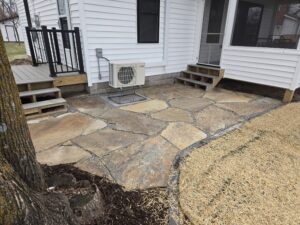
You design for Alexandria Lifestyles. You outfit for every day. Then you mold the minutiae to lake country schedules, freeze-thaw oscillations, and the mix of clay-sandy loam soils native to Douglas County. Rockwood Landscape Company sources custom paver and flagstone systems that match the way you move, entertain, and maintain your space through Minnesota seasons.
Lakeside Living
Shoreline homes near Lake Darling or Geneva require hardscape that drains quickly, has great traction when wet, and can withstand tracked sand. Textured-face concrete pavers provide solid paths from dock to house, while irregular flagstone delivers that natural read that complements reeds, birch, and granite outcrops. You gain traction without abrasive edges and joints that allow stormwater to percolate down instead of sheet across patios.
Salt, snowmelt, and spring heave pound surfaces rigid. Both concrete pavers and natural stone withstand that if the base is deep, well-compacted, and set with free-draining aggregate that breaks the capillary rise. Use polymeric joint sand for weed resistance around the shore, then schedule seasonal inspections for washout after heavy rains.
Shade lines dance down the pier with the day on the water. Lay paths with wider landings at grill or fire pit nodes. Add low, shielded lighting to cut glare on the lake and specify darker joint sand where fish cleaning or coffee spills might stain. Rapid stain lift and swift sweeps maintain the authentic color tone.
Functional Flow
Make a beginning with traffic counts and turning radii. A 10 to 12-foot patio depth accommodates dining for four. Bump to 14 feet if you want chair backs and server routes to have a bit of headroom. Keep a 2 percent cross-slope for drainage away from foundations, tied into swales that won’t erode sandy banks.
Base prep extends service life. Rockwood utilizes graded aggregate, geotextile in clay pocket areas and carefully screeded sand beds prior to paver placement. Edge restraints lock courses so the freeze-thaw cycles do not creep joints apart. That install discipline saves you rebuilds and keeps lines tight year after year.
Mix hardscape, softscape, and water features so movement flows. Flagstone steppers through native grasses lead to a paver terrace, then a little rill or bubbler hides road noise. Design out hose bibs, storage nooks, and snow staging zones from main sightlines.
Custom Features
Select patterns to suit your vision and application. Herringbone pavers repel shear on drive aprons. Random ashlar reads cool on patios. Irregular flagstone makes winding garden paths feel natural and special. The color shift of each stone contributes to local character.
Schedule maintenance with an easy calendar. Sweep and rinse, pull or torch weeds at season change, refill joints as needed, and go easy on winter salt at edges. Local soil quirks and water tables dictate base depth and drainage. Rockwood’s Alexandria field experience guides those decisions.
Built for Minnesota Winters
Rockwood creates these paver and flagstone systems for Alexandria’s cold, wet, and windy shoulder seasons, not just the peak summer months. You receive assemblies that combat freeze-thaw cycles, shed snow, and resist salt and traffic to keep your surface flat, safe, and simple to maintain.
Freeze-Thaw Resilience
You combat quick cycles around 32°F in Douglas County that shove water in and out of seams and base layers. We require ASTM C936 concrete pavers and dense natural stone with low absorption, coupled with polymeric joint sand that won’t wash out, so joints move without heaving.
Yeah, it’s the build-up that counts, not the face. We dug into native, stable soils, then laid geotextile over Alexandria’s ubiquitous silty loams to isolate fines. A 6- to 10-inch compacted crushed stone base (MN/DOT Class 5 or similar) with 3/4-inch minus aggregate provides a free-draining platform. Above, a 1-inch bedding layer of washed concrete sand seats the units, and edge restraints seize the field. This stack-up allows micro-movements to take place without cracking.
For sites with clay pockets or downspouts, we install underdrains or a permeable base with open-graded stone and an outlet. That selection keeps meltwater moving and is the single best hedge against frost jack.
Snow Management
You want crisp shovel or single-stage blower passes. We set tight joints, keep lippage to a minimum, and use running bond or herringbone patterns in heavy-traffic lanes to prevent blades from snagging. A subtle cross-slope of only about 1/8 inch per foot directs melt to daylight, not your foundation.
Heated zones can be selected near stoops or garage walks. Cables lay in the bedding below concrete pavers for secure service access. If you use deicers, stick with calcium magnesium acetate or magnesium chloride because they’re gentler on concrete and stone than rock salt. Our pavers are designed to withstand Minnesota winters.
Material Durability
Concrete pavers rated for freeze-thaw, with air entrainment and high compressive strength, shrug off winter cycling. Dense granites, quartzites, and tight-grain sandstones hold edges better than softer limestones. We source pieces with proven Midwest track records.
Alexandria local soils frequently require thicker bases at drive entries and under hot tub pads. With good compaction, drainage, and joint stabilization, a Rockwood install stands up for decades, even through hard winters.
Harmonizing Hardscapes with Nature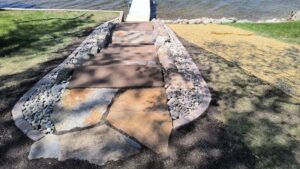
By harmonizing your hardscape with nature, your patios, walkways, and retaining walls sit in step with plants, water, and the natural lay of your lot. Working in and around Alexandria, MN, that means interpreting the glacial soils, lake breezes, and freeze-thaw cycles, then selecting paver and flagstone systems that appear native, drain well, and withstand winter.
Native Plantings
Harmonize the hardscaping with nature by using hardy natives that love Douglas County soils and lake-effect moisture. Balance flagstone joints with creeping thyme or prairie dropseed for low, soft edges. Surround a paver patio with clusters of Minnesota natives—black-eyed Susan, butterfly weed, and little bluestem—to avoid a hard visual stop.
Connect the scale to the plant height and spread. A broad paver terrace near Lake Darling can step down to a slender flagstone path, then fade into bluestem and serviceberry. Irregular flagstone shapes feel more natural juxtaposed against beds of coneflower and sedge. The fractured lines camouflage snow-melt stains better than linear paver grids.
Consider upkeep with purpose. Drip lines hidden under edging reduce runoff and leaf spot. Spring cutbacks and a mid-summer light mulch keep joints clean without herbicides.
Water Runoff
Plan for freeze-thaw and spring melt. Install pavers on a compacted Class 5 base with a clean 3/8-inch chip setting bed, pitched 2 percent away from foundations. Incorporate French drains along retaining walls that back clay pockets. Flagstone on a permeable, open-graded base directs water downward and laterally, alleviating heave.
Where surface water congregates, use permeable pavers in traffic areas and cobble swales to channel flow toward a dry well or rain garden. In tight lakeside yards, a pondless waterfall cascades water back into a buried basin, providing sound and habitat without the open standing water.
Check joints every spring. Top off polymeric sand where joints pull open. Clear debris before storms to maintain infiltration rates.
Ecosystem Integration
Meld is constructed and wild with no jagged edges. Incorporate local-tone stone, cool grays, and buff that reflect Alexandria granite and prairie soils, so the new work feels at home. Disrupt vast patio planes with planted pockets, seat-height boulders, and a small fountain that attracts birds and damselflies, increasing comfort and utilization.
Design for durability and minimal footprint. A good base, geotextile to prevent soil migration, and edge restraint provide decades of service. Select sizes appropriate to function, such as 10 by 14 feet for dining and 4-foot paths for two-way passage, and schedule a plan that accommodates plant seasons and concrete cure periods. Keep a simple care plan: sweep monthly, rinse stains quickly, check edges after freeze, and reset any raised piece before it spreads.
Conclusion
You need a yard that hustles hard and looks sleek. In Alexandria, you want it to stand up to freeze-thaw cycles. Rockwood Landscape Company builds for that. You get tight joints, clean lines, and smart drainage. You experience less heave and less shift. You shovel quickly in January. You grill with buddies in July.
Flagstone evokes a warm, Northwoods aura. Pavers provide you with crisp geometry and rapid snow melt. Both complement native plants, lake views, and sandy loam soils. Consider a sun nook on Lake Le Homme Dieu. Or a fire ring ‘windscreen’ that cuts a west wind. Or a walk that keeps that sand out of the house!
Ready to design your Alexandria space? Contact Rockwood Landscape Company today.
Frequently Asked Questions
What makes paver patios a smart choice for your Alexandria home?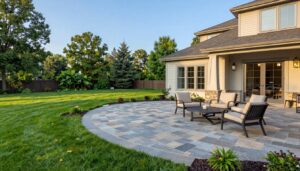
Pavers provide durability, ease of repair, and unique designs. If a paver cracks, you replace a single unit. They drain really well and do not heave when put in correctly. You get enduring curb appeal that suits Minnesota weather.
How does Rockwood Landscape Company install pavers in Alexandria, MN?
We begin with a site visit and design. Then we dig, create a compacted base, level bedding sand, and install edge restraints. We compact, add joint sand, and seal where necessary. Each step adheres to ICPI best practices for Minnesota soils and freeze-thaw cycles.
Should you choose pavers or flagstone?
Select pavers for uniform patterns, low maintenance, and industry-leading warranties. Choose flagstone for a more natural, organic appearance with individual shapes. We’ll steer you based on budget, style, traction, and how you intend to use the space throughout the year.
Are these systems built for Minnesota winters?
Yes. We engineer for freeze-thaw shifting with appropriate base depth, drainage, and polymeric sand. De-icing salt-safe alternatives exist. With the right slope and edging, they will stay put through snow, ice, and spring thaws.
How long will your new patio last?
Paver patios, when installed and maintained correctly, generally endure for 25 to 50 years. Flagstone can survive for decades as well. Daily sweeping, joint sanding, and sealing, where applicable, preserve color, joints, and surface integrity.
Can you customize colors and patterns to match your property?
Of course. Select colors that complement Alexandria’s lakeside views, cabin colors, or contemporary homes. Choose from herringbone, running bond, or random patterns or natural flagstone. We can incorporate steps, seat walls, fire pits, and lake-friendly paths.
What maintenance do you need in Alexandria’s climate?
Sweep, rinse, and top off polymeric joint sand as needed. Spot-treat weeds. Clear snow with a plastic shovel. Apply calcium magnesium acetate or sand for traction. Reseal pavers every 3 to 5 years if your product requires it.
